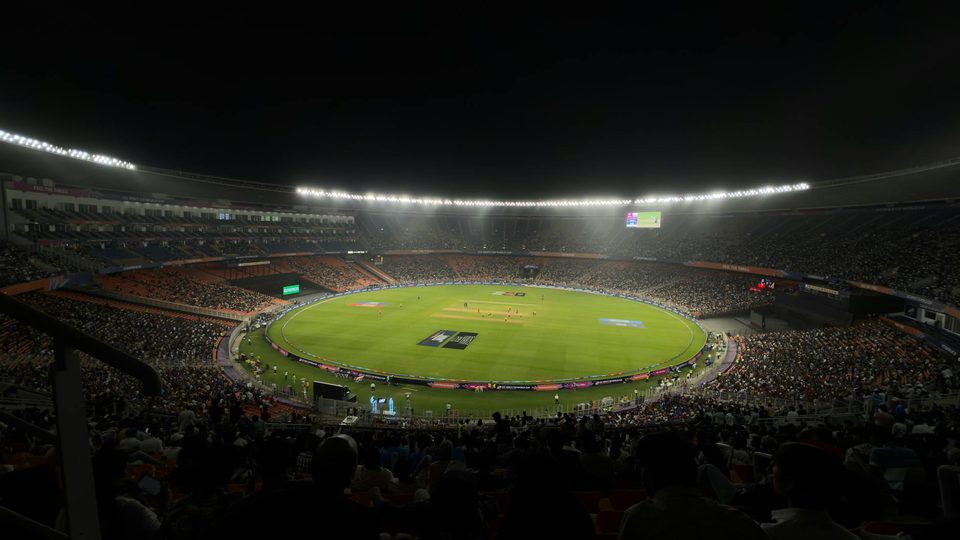
Event security changes the surveillance equation because the venue is temporary, the crowd is dense, and the response window is short. A system that is acceptable for a fixed industrial site may be poorly suited to a stadium, race, festival, or public gathering where the protected area changes quickly and the operational priority is immediate triage.
That is why anti-drone event security should be designed as a temporary operations problem rather than a permanent infrastructure problem. The aim is not to build a city-scale airspace picture for a weekend event. It is to create enough local awareness to support lawful restrictions, fast verification, and clear coordination among event security, law enforcement, and public-safety partners.
Restrictions Help, but They Are Not the Whole Answer
FAA rules and event-specific restrictions matter. The FAA’s stadium and sporting event restrictions and temporary flight restriction guidance show how event airspace can be formally protected. But those restrictions do not generate local awareness on their own. A restricted venue still needs to know whether an object is present, whether it is relevant, and who must respond.
This is the gap that local sensing and operator workflow must fill.
A Temporary Event Sensor Model
The table below is a synthesized planning aid.
| Layer | Main role at an event | Common mistake |
|---|---|---|
| Local search sensor | Gives early warning around the venue and likely approach areas | Building too large a coverage objective for a short-duration mission |
| RF or cooperative awareness | Helps identify transmitters, known signals, or remote ID broadcasts | Assuming all event-related drones will be cooperative |
| EO/IR cueing | Rapid confirmation and evidence capture | Requiring operators to manually search the sky during a live event |
| Incident coordination | Connects security teams, law enforcement, and venue command | Treating the air event as separate from the venue operations room |
For large events, the best design is usually compact and disciplined. The system should focus on the relevant airspace volume, likely launch or approach areas, and the exact incident handoff path.
Temporary Facilities Have Different Failure Modes
Temporary venues introduce non-technical risks: rushed setup, changing perimeter definitions, mixed staff training levels, ad hoc communications, and unfamiliar sight lines. CISA guidance for temporary facilities is useful here because it starts with vulnerability assessment, communications, and emergency action planning rather than technology alone.
That is the correct order for anti-drone event planning too. A technically capable system underperforms quickly if operators do not know who validates alerts, who owns evidence, and when public-safety agencies must be informed.
The Response Model Should Be Simple
The best anti-drone event workflows are usually simple:
- detect,
- confirm,
- classify,
- escalate through a pre-agreed chain.
Complex multi-console workflows are a bad fit for temporary venues. Event operations rooms need clarity, not technical theater.
Venue Geometry and Crowd Flow Shape the Sensor Plan
Event security works best when the sensor layout follows the actual venue geometry instead of an abstract circular coverage target. Stadium roofs, temporary stages, spectator queues, parking edges, and nearby launch areas all change where useful warning time is created. Crowd movement also matters because a drone event over an ingress line or dense seating zone creates a different response problem from the same event over an empty service area.
This is why event systems usually benefit from a compact, high-discipline layout rather than an oversized coverage ambition.
Command Roles Must Be Decided Before the Event Starts
Temporary venues often include venue security, law enforcement, public-safety liaisons, and technical operators who do not work together every day. A real event system therefore needs pre-agreed rules for:
- who acknowledges the alert first,
- who owns confirmation,
- who informs external agencies,
- and what evidence threshold changes the response posture.
If those roles are undefined, even a technically good system can create hesitation during the period when response time matters most.
Rehearsal Matters More Than Feature Count
Event deployments should also be rehearsed. Useful checks include:
- cueing speed to the confirmation layer,
- communication between venue command and public-safety partners,
- how false alarms are triaged under crowd pressure,
- and whether the venue team can stay inside one operating workflow.
These rehearsals often matter more than adding one more sensing feature, because event protection succeeds through clean execution under time pressure.
Temporary Infrastructure Needs Redundancy
Short-duration events also need practical fallback planning. Temporary power, network backhaul, and operator seating arrangements are often more fragile than at permanent sites. A venue should decide in advance what happens if one sensing layer drops, if the main command display becomes unavailable, or if teams must continue from a simplified picture for the remainder of the event.
Success Is Measured in Decision Speed
At a live event, the system succeeds when venue teams can move from first alert to confident action quickly enough to protect the crowd and keep agencies aligned. That is a better measure than sensor count or theoretical coverage size alone.
Conclusion
Anti-drone event security should be designed as a temporary, high-tempo operations problem. The strongest systems focus on the relevant venue geometry, define command roles before the crowd arrives, and rehearse the detection-to-escalation chain so operators can act quickly without unnecessary complexity.