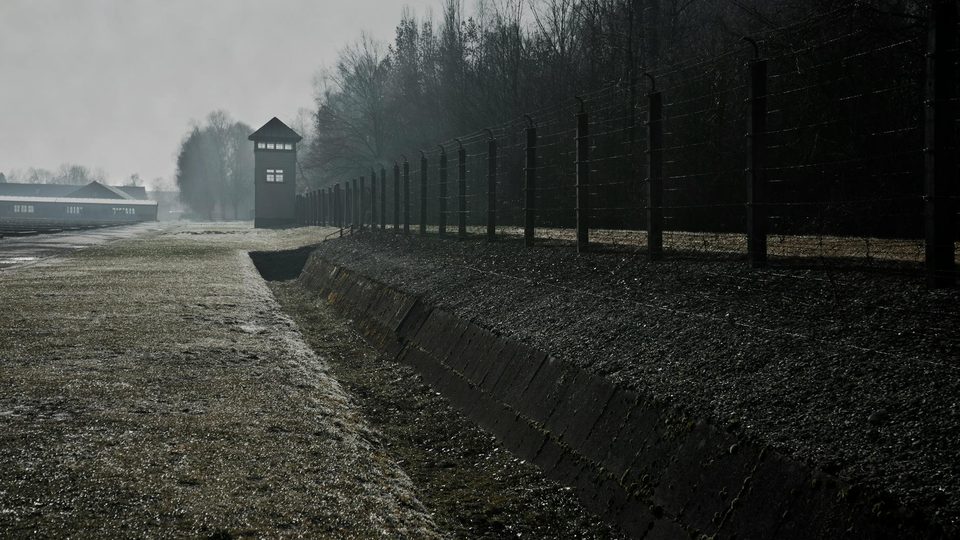
Military base perimeter security is often described in terms of fences, barriers, and guard posts, but those are only part of the system. Modern installations need an integrated picture that links ground approaches, access control points, standoff zones, and low-altitude airspace. That is especially true as small unmanned systems become part of the threat environment around military facilities.
Army physical security doctrine already treats access control, perimeter measures, patrols, and supporting systems as one security problem. More recent defense guidance on countering unmanned systems pushes the same direction: installations need layered awareness and a coordinated command approach rather than isolated point solutions.
The Perimeter Is a Decision Zone
A military perimeter is not just a line to be watched. It is a zone where security teams need to decide:
- whether movement is authorized,
- whether an event threatens an access point, patrol route, or sensitive asset,
- whether the object is on the ground or in the air,
- and which force element should respond.
That is why a base perimeter architecture should be built around response time and confidence, not only around fence coverage.
A Practical Installation Security Stack
The table below is a synthesized planning aid.
| Layer | What it contributes on a base perimeter | Common weakness |
|---|---|---|
| Ground-area surveillance | Early awareness near approach routes, dead ground, and fence lines | Over-focusing on the fence while ignoring standoff areas |
| Access-control support | Verification around gates, checkpoints, and vehicle queues | Letting checkpoint cameras operate separately from perimeter alerts |
| Low-altitude awareness | Detection of drone or low-flying activity near sensitive zones | Treating airspace awareness as an optional add-on |
| Command workflow | Shared incident picture for guards, patrols, and operations centers | Forcing different teams to work from different consoles and maps |
The Army’s Physical Security and Access/Entry Control doctrine is still a useful baseline because it frames access control and perimeter security as linked tasks. More recent DoD material on countering unmanned systems reinforces the need to include low-altitude threats in that installation picture.
Access Points Usually Reveal Architecture Problems First
Many perimeter systems look adequate until a busy gate, service entrance, or vehicle holding area is involved. Those points compress people, vehicles, identity checks, and response time. They also create visual clutter and can hide the fact that the broader perimeter picture is not well integrated.
A strong design uses the same operational picture for gates, patrols, and wider-area sensors. That allows the base to understand whether an event is isolated to one checkpoint or part of a broader pattern along the perimeter.
Counter-UAS Belongs Inside the Base Security Model
Counter-UAS at an installation should not be treated as a completely separate program. From a base commander or security-operations perspective, a drone track is another approach vector that needs to be correlated with ground activity, sensitive zones, and response authority. If the air picture is separated from the rest of perimeter operations, the installation loses time and context.
Standoff Space and Dead Ground Must Be Owned
Many base perimeter designs look sufficient until teams examine the spaces just outside the obvious fence line. Dead ground near terrain breaks, service roads, vegetation, drainage channels, or utility access corridors can create approach routes that are not visible from gates or patrol roads. Those areas matter because they shape how much warning time a patrol or quick-reaction element really has.
This is one reason installation security should treat the perimeter as a defended zone with depth rather than a single boundary line. The closer the monitoring logic stays to the actual ground and air approach geometry, the more credible the security picture becomes.
Command Authority and Rules of Response Matter
Base security systems also need a clear authority model. A good platform should help answer:
- who owns initial assessment,
- who can redirect patrols,
- when an air event changes force protection posture,
- and what evidence threshold is needed before broader notification or escalation.
If those rules are not explicit, the installation may still detect events but respond inconsistently across gates, patrol units, and operations centers.
Validation Should Include Mixed Air and Ground Events
Base perimeter validation should test more than isolated fence activity. Useful scenarios include:
- simultaneous gate pressure and perimeter movement,
- low-altitude tracks appearing near sensitive areas while ground patrols are active,
- communications loss between local posts and the central command picture,
- and false-alarm conditions that force operators to discriminate quickly.
These tests show whether the installation is truly managing a shared security picture or only operating several adjacent systems.
Training and Patrol Integration Matter
Even a well-designed perimeter picture can fail if patrols, gate forces, and operations-center personnel do not use it in the same way. Regular drills should therefore test whether field units can interpret the same event consistently, whether handoff language is clear, and whether the command post can maintain context when several events occur close together in time.
That training burden is part of the architecture, not an afterthought.
Conclusion
Military base perimeter security should be treated as a layered decision system that combines perimeter watch, access control, standoff-zone awareness, and counter-UAS integration. The strongest designs reduce ambiguity before response forces move, preserve one command picture across teams, and validate the full air-ground workflow rather than each security layer in isolation.
Related Reading
- High-Power Microwave Counter-UAS Systems: Where They Fit in Layered Defense
- What is Spectrum Monitoring?
- How Drone Detection Systems Work