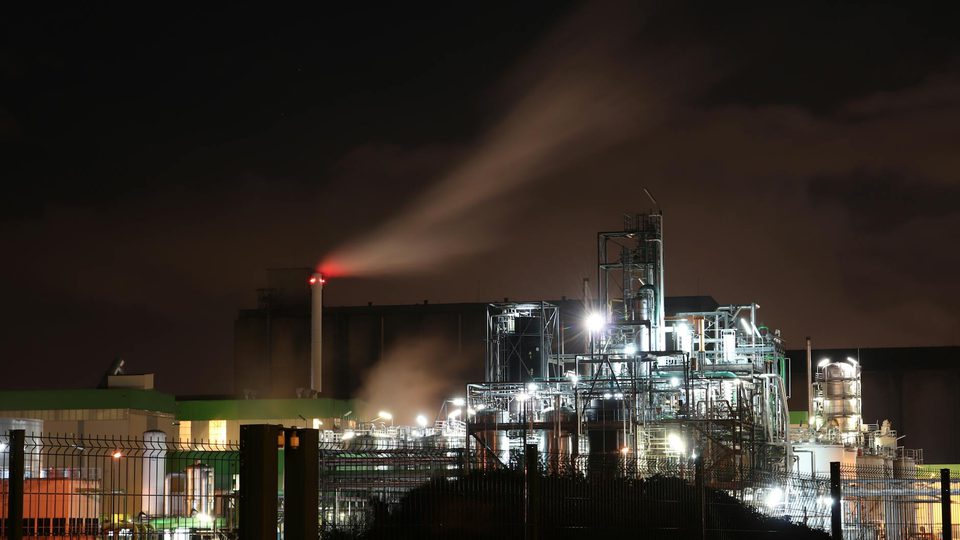
Oil and gas facility security is shaped by an uncomfortable combination of factors: large or fragmented site footprints, hazardous processes, constrained access routes, and assets whose disruption can have consequences beyond the fence line. A good design therefore has to do more than detect intrusion. It has to support safe verification, operational continuity, and coordination between security staff and operations teams.
This is one reason energy security frameworks emphasize resilience as well as protection. The U.S. Department of Energy describes the sector as geographically dispersed and interdependent, which means a facility security architecture should be judged not only by whether it detects an event, but also by how well it helps the site preserve safe operations.
Why Oil and Gas Sites Need More Than Conventional Perimeter Security
Unlike a compact office campus, an oil or gas site may include storage, process units, road approaches, flare areas, utility links, and remote or unattended assets. Those areas do not all need the same sensing treatment. The security value usually comes from dividing the site into zones with different objectives:
- outer approach awareness,
- perimeter and gate control,
- close-in protection around process or control areas,
- and event confirmation before operators or responders move into hazardous spaces.
That zoning approach is important because not every alert should produce the same response. A movement event near a remote fence section is different from an anomalous presence near a tank farm, compressor area, or control building.
A Practical Layered Model
The table below is a synthesized planning aid.
| Layer | Main purpose at an oil and gas site | Common mistake |
|---|---|---|
| Wide-area detection | Early awareness on approach routes, open ground, and stand-off space | Compressing all sensors to the inner fence line |
| Visual confirmation | Lets operators assess intent and environment before dispatch | Sending personnel into poorly understood areas |
| Access and rule integration | Ties alerts to gates, maintenance windows, and approved activity | Treating every alarm as an equal-priority intrusion |
| Operations-aware workflow | Escalates events with plant safety and continuity in mind | Separating security consoles from plant decision-makers |
The goal is to reduce uncertainty early. Security teams want to know whether something is happening. Operations teams want to know whether the event affects safety, continuity, or emergency action. A layered system helps both groups by giving them shared context.
Hazardous Areas Change the Verification Problem
Oil and gas facilities should avoid a simplistic “alarm then dispatch” model. In hazardous environments, response teams may need to confirm conditions visually first, understand wind and access conditions, and coordinate with control-room personnel before moving closer. That makes remote assessment especially important.
This is where optics, stable track history, and disciplined incident display become valuable. The question is not only whether the system sees an object. It is whether the site can assess the event with enough confidence to act safely.
Security Should Support Resilience, Not Fight It
The Department of Energy’s energy security overview is a useful reminder that energy infrastructure protection is inseparable from resilience planning. A site security design should therefore account for incident logging, escalation thresholds, fallback communications, and continuity procedures. If a system only generates detections but does not improve coordinated decision-making, it is underperforming.
The Monitoring Logic Should Reflect Operating State
Oil and gas facilities do not operate in one fixed condition. Normal production, turnaround periods, maintenance windows, contractor access, and emergency shutdown conditions all change what activity should look suspicious. A site that ignores operating state usually floods the control room with low-value alarms during planned work and then trains operators to discount later alerts.
That is why mature facility security designs usually align alert logic with:
- work-permit windows,
- expected contractor or vehicle access,
- maintenance-zone ownership,
- and temporary process restrictions that change how responders can move.
This makes the system more credible because the alert picture reflects the plant’s real operating mode instead of an idealized always-normal state.
Validation Should Include Safety-Constrained Response
Security validation at an energy site should include more than proving a sensor can detect movement. The harder question is whether the site can verify and escalate safely when the event occurs near hazardous equipment, flare zones, confined access areas, or remote process assets.
Useful tests usually include:
- nighttime and low-visibility confirmation,
- incidents near hazardous or no-go areas,
- communication delay between security and operations,
- and scenarios where the first response must remain remote until plant staff clear access.
These drills often reveal whether the facility is actually prepared to act on the awareness the system produces.
Common Planning Mistakes
Several mistakes appear repeatedly in oil and gas security programs:
- over-concentrating sensors at the inner fence while leaving long approach routes weak,
- treating process and control areas as if they were ordinary perimeter sectors,
- separating plant operations from security incident review,
- and measuring success by alarm count instead of by reduction in uncertainty and safer response decisions.
Those mistakes usually create a system that looks active but does not improve decision quality when the event is near the assets that matter most.
Conclusion
Oil and gas facility security should be designed around consequence, process safety, and continuity of operations. The best systems divide the site into meaningful security zones, support remote verification in hazardous areas, and link the alert picture to the plant’s actual operating state. That is what turns surveillance into usable protection rather than disconnected alarm generation.
Related Reading
- What is Detection Range?
- How Radar and Electro-Optical Systems Work Together in Low-Altitude Security
- What is Multi-Sensor Fusion?